

VitalSignsGenerator produces these for testing clinical monitoring and
early-warning models without touching protected health data.
The model Each series is a per-series baseline plus a slow random-walk drift, a circadian rhythm, heart-rate variability (for heart rate and blood pressure), random physiological events (activity bursts, rest periods, spikes), and measurement noise. The non-heart-rate signals also carry a correlation with heart rate.vital_signchooses which of the six signals to emit, andpatient_type—healthy,cardiac,sepsis,respiratory, orhypertensive— sets the baselines and the physiological bounds that values are clipped to. The circadian and HRV components assume one step is one minute (freq='min'); other frequencies distort those cycle periods.
Heart rate - healthy patient
Generate 24 hours of per-minute heart rate data for a healthy patient with circadian rhythm, HRV, and clinical events enabled.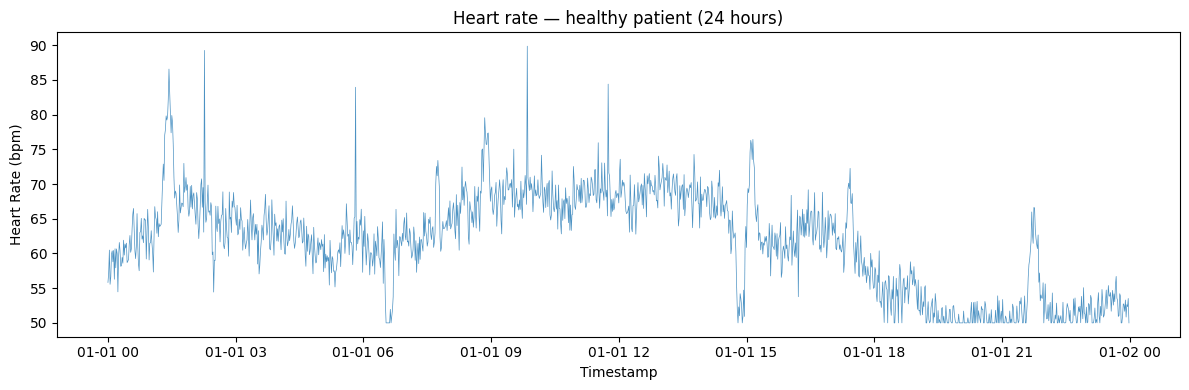
Comparing patient types
Compare heart rate distributions across different patient conditions.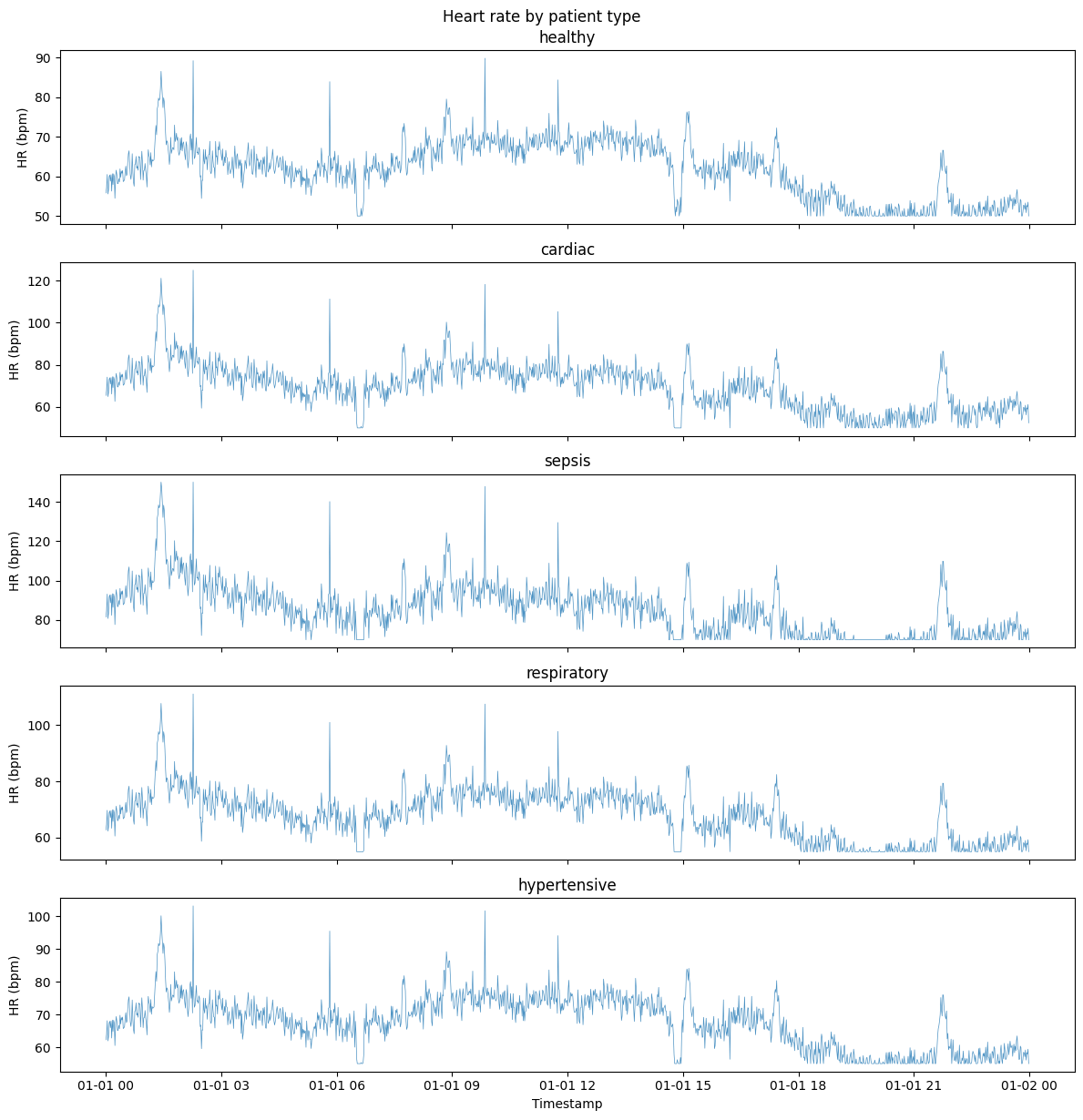
All vital signs - sepsis patient
Generate all six vital signs simultaneously for a sepsis patient over 8 hours.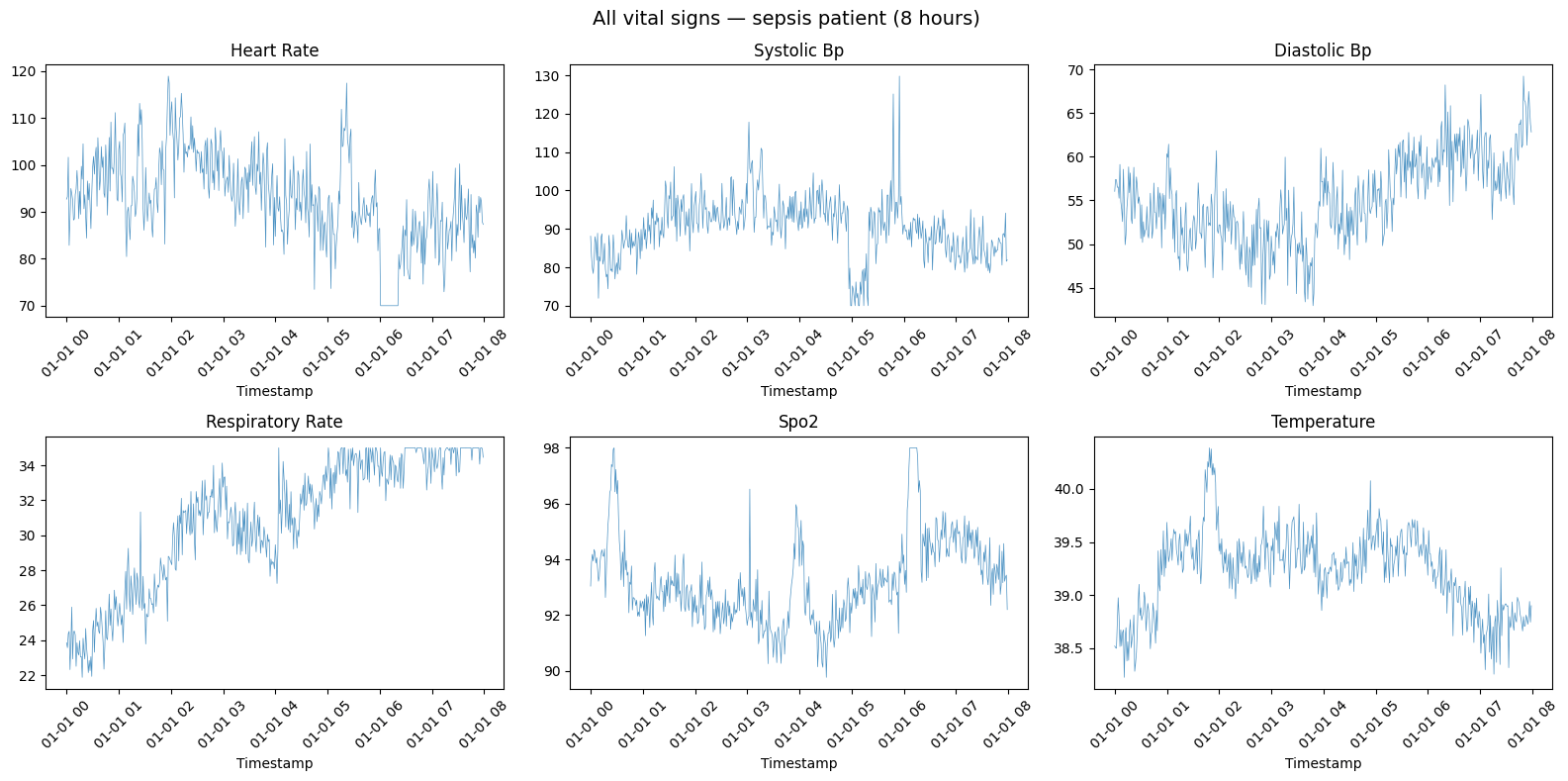
Oxygen saturation (SpO2) comparison
Compare SpO2 levels across healthy, respiratory, and sepsis patients. Lower SpO2 and more time below 95% indicates worse oxygenation.Model information
Inspect the generator configuration and baseline values for each vital sign.Related generatorsFull parameters are in the generator reference.
- Anomalies — inject labelled events for detector benchmarks.
- IoT sensor — another instrument-style signal with artifacts.